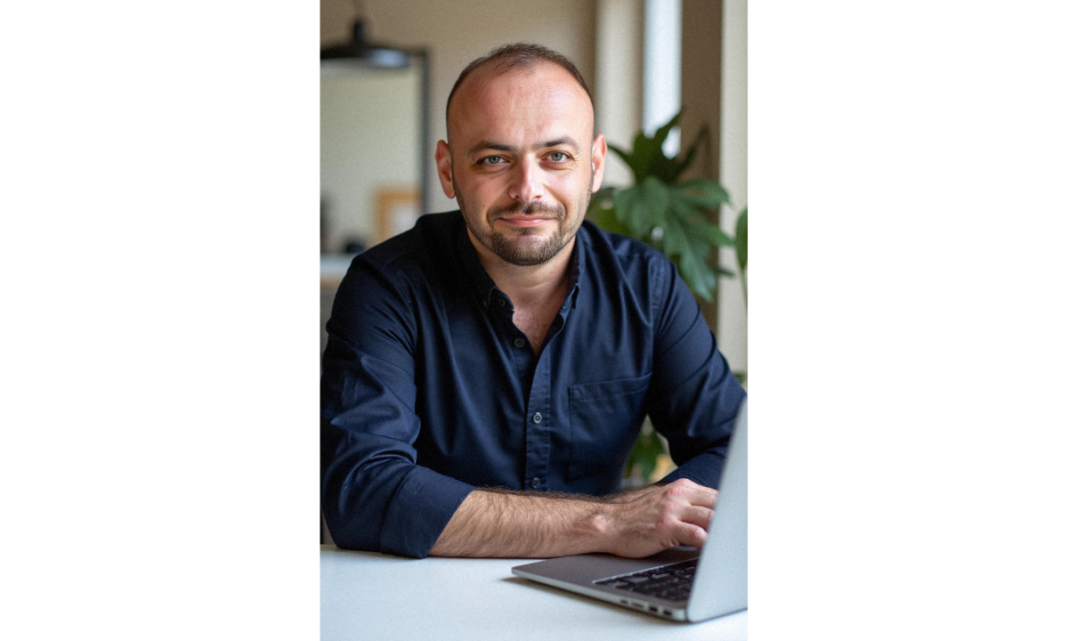
Cybersecurity is often portrayed as a discipline of control and caution, but for today’s CISOs, the real challenge is velocity. CISO Diaries explores how security leaders operate inside that tension: translating abstract risk into business decisions, navigating uncertainty, and building systems that allow organizations to move faster without losing trust. Through candid conversations about routines, habits, mental load, and personal philosophy, this series reveals how modern CISOs think, lead, and adapt, especially as AI, autonomy, and complexity redefine what “secure” really means.
About the Interviewee: Alexander Raif
Alexander Raif is the Chief Information Security Officer at SysAid, where he leads enterprise, product, and Agentic AI security in close partnership with the CEO and Board. With a career shaped by rapidly scaling SaaS environments and shifting regulatory landscapes, Alex is known for bringing structure to chaos and for designing security programs that accelerate business rather than slow it down. He describes his role as a “Trust Architect,” translating cyber risk into revenue, resilience, and customer confidence.
At SysAid, Alex has delivered SOC 2 Type II and ISO 27001 on an accelerated timeline, embedded secure-by-design practices across engineering, and significantly reduced detection and response times through engineering-led security operations. He is also pioneering governance models for the Agentic AI era, focusing on Responsible AI security, integrity, and assurance. Beyond his role as a CISO, Alex is a passionate mentor and educator, building pathways for non-traditional talent through his “From Zero to Hero” initiative and advocating for neurodiversity as a leadership strength in cybersecurity.
How do you usually explain what you do to someone outside of cybersecurity?
I tell them I’m a “Trust Architect.” Most people imagine I sit in a dark room fighting hackers in a hoodie. The reality is that I build the invisible guardrails that allow the business to run fast without crashing. My job isn’t to be the brakes; it’s to be the steering system that lets us drive at 200 km/h safely.
What does a “routine” workday look like for you, if such a thing exists?
I have ADHD, which I’ve learned to treat as my engine rather than a bug. This means “routine” is a loose concept! A typical day is a mix of high-level altitude—translating cyber risk for the board—and deep dives into the trenches. One minute I’m debating AI governance strategy, and the next I’m pivoting to handle an emerging vulnerability. I don’t just tolerate that dynamic switching; I thrive on it.
What part of your role takes the most mental energy right now?
Translation. Technical problems usually have a root cause; business problems have a root motivation. Taking a complex abstract risk—like an Agentic AI threat or a supply chain nuance—and explaining it to stakeholders in terms of revenue, brand trust, and liability takes a massive cognitive load. It’s about ensuring the board understands the “why,” not just the “what.”
What’s one security habit or routine you personally never skip? (Work or personal.)
The “Paranoid Backup.” In my personal life, I’m a writer—I write children’s books and educational content. The thought of losing that creative work is terrifying. The “3-2-1” backup rule isn’t just a policy for me; it’s a religion. If it doesn’t exist in three places, it doesn’t exist.
What does your own personal security setup look like?
It’s practical but hardened. I use a hardware key (YubiKey) wherever supported—it’s the single best upgrade anyone can make. I use a password manager for everything (I honestly don’t know 90% of my own passwords). And I believe in segmentation: the device I use for high-sensitivity work isn’t the same ecosystem I use for testing new AI tools or scrolling social media.
What book, podcast, or resource has influenced how you think about leadership or security?
The act of teaching has been my greatest resource. I run a “Zero to Hero” mentorship program, and having to explain complex concepts to beginners forces a level of clarity that you don’t get from reading a whitepaper. If I can’t explain a risk concept to a student, I certainly can’t explain it effectively to a CEO. Teaching keeps me honest.
What’s a lesson you learned the hard way in your career?
That you are only as secure as your contracts. You can build the perfect digital fortress, but if a third-party SaaS tool has a breach, you are the one exposed. Dealing with supply chain incidents taught me that the perimeter isn’t the firewall anymore; it’s the legal agreement and the vendor risk assessment.
What keeps you up at night right now, from a security perspective?
The velocity of AI weaponization. We are entering the era of “Agentic AI,” where attacks can be autonomous, personalized, and scalable. The idea of deepfakes being used for precise social engineering against my finance team or HR department is a very real, very near-term worry.
How do you measure whether your security program is actually working?
When the business comes to me before they sign the deal. If the sales or product teams ask, “Alex, how can we build this securely?” instead of trying to bypass me, I know we’ve won. Security metrics like “time to patch” are important, but cultural integration is the only metric that predicts long-term survival.
What advice would you give to someone stepping into their first CISO role today?
Learn the P&L before you change the API. If you don’t understand how your company makes money, you can’t protect it. Build relationships with the CFO, the General Counsel, and the VP of Sales in your first week. You need allies, not just firewalls.
What do you think will matter less in security five to ten years from now?
The alphanumeric password. We are already moving toward passkeys and biometric authentication. In ten years, the idea of typing a static string of characters to prove your identity will seem as archaic—and as dangerous—as writing a check in pencil.
Looking ahead 10 years, what do you believe security teams will spend most of their time on that they don’t today?
“Reality Defense.” We are moving from protecting confidentiality to protecting integrity. As AI generates more hyper-realistic video, audio, and text, the CISO’s job will be to verify reality. We will spend our days validating that the person on the video call is actually a human and that the data in the quarterly report hasn’t been hallucinated or manipulated by an algorithm.