
As AI adoption accelerates, IAM has become one of the most critical yet elusive challenges. Many enterprises remain stuck on square one – integrating their IAM stack, struggling to maintain identity hygiene, manage lifecycles, and track sprawling entitlements across an ever-changing environment.
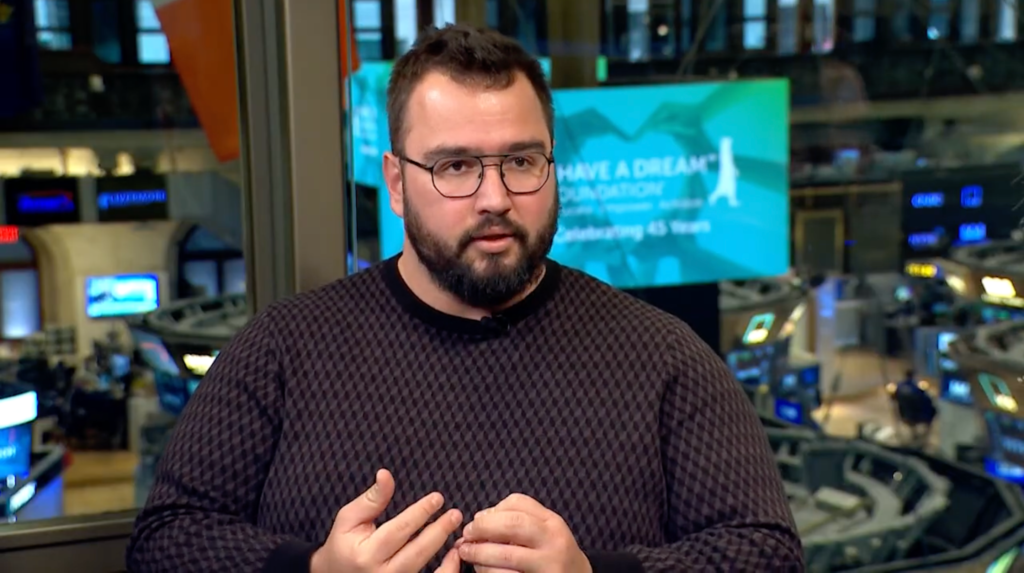
TV reporter Jane King recently spoke with Yossi Barishev, founder and CEO of a stealth identity security company, to explore why identity remains a bottleneck and how AI is reshaping the landscape.
The Data Bottleneck in IAM
Barishev’s career began in cyber incident response, where he saw firsthand how identity gaps impede remediation. “When you do cyber incident response, obviously, you see all the faults and all the flaws in an organization kind of flowing upwards, and the biggest bottleneck consistently was always identity. Figuring out what are the compromised identities? How do we get to them? How do we remediate the attacker’s footprint in the environment? Scouring after that data, and data is a big gap, context,” said Barishev.
Even as he moved into leadership roles, the pattern persisted. “I saw my teams constantly scouring after identity-related data, identity-related context, who has access to what, why, who approved that… All of these moments made me realize that there’s definitely a major bottleneck right now in identity, and at the same time, now more than ever, identity is the new perimeter,” said Barishev.
Complexity Amplified by AI and SaaS
The explosion of SaaS and AI applications, and the fragmentation of the IAM stack into multiple point solutions, have created a complex and hard-to-maintain identity ecosystem. “Too many pains to deal with, too many data sources to deal with,” said Barishev, describing how organizations went from just a couple of IAM tools to stacks of seven to fifteen fragmented solutions.
AI, often seen as a solution, brings both promise and pitfalls. “A lot of things were overpromised about AI. If anything, it’s still perceived as this silver bullet magic wand… In reality, AI has its limitations. Its main limitation, by the way, is whatever you feed it with. If you feed it with junk, it will output junk,” said Barishev.
He explained a real-world example: “If I feed it the wrong context, it will give me an answer based on that. So if I give it only a fragment of the truth, it will give me an incorrect answer, and then I’ll have to act on an incorrect conclusion,” said Barishev.
Blind Spots and Compliance Theater
Even with modern tools, organizations often operate under an “illusion of coverage.” “There’s a lot of disconnected applications in any enterprise environment… These are the blind spots that people miss,” said Barishev.
Audits often exacerbate the problem. “It’s really hard to get this data in real-time fashion. By the time you act upon it, the reality behind the changes has moved,” said Barishev. Compliance can become theater rather than meaningful improvement.
M&A: A Perfect Storm for Identity Risk
Mergers and acquisitions introduce another layer of complexity. “An M&A is just not a merger of two businesses. It’s a merger of two IT stacks, two pieces of infrastructure… Usually, what happens is those two companies end up being kind of separate, kind of together in this mishmash state. It gets ugly,” said Barishev.
The process of integrating identity systems often spans months or even years, leaving gaps that malicious actors could exploit.
Building on a Foundation of Data
For Barishev, IAM data is the missing foundation for modern identity teams. “If I could spend just $1 on this problem, I would spend it on improving my identity-related data,” he said. “Every single system you build on top of this data will either suffer from a garbage-in, garbage-out problem, or… will have reliable and clean data to work with”.
Looking ahead, he sees organizations demanding more than visibility. “People really care about how we can have a centralized source of truth for all things identity to act upon in a meaningful way, a new foundation, so to speak, on top of which you can build your future,” said Barishev.