
What happened
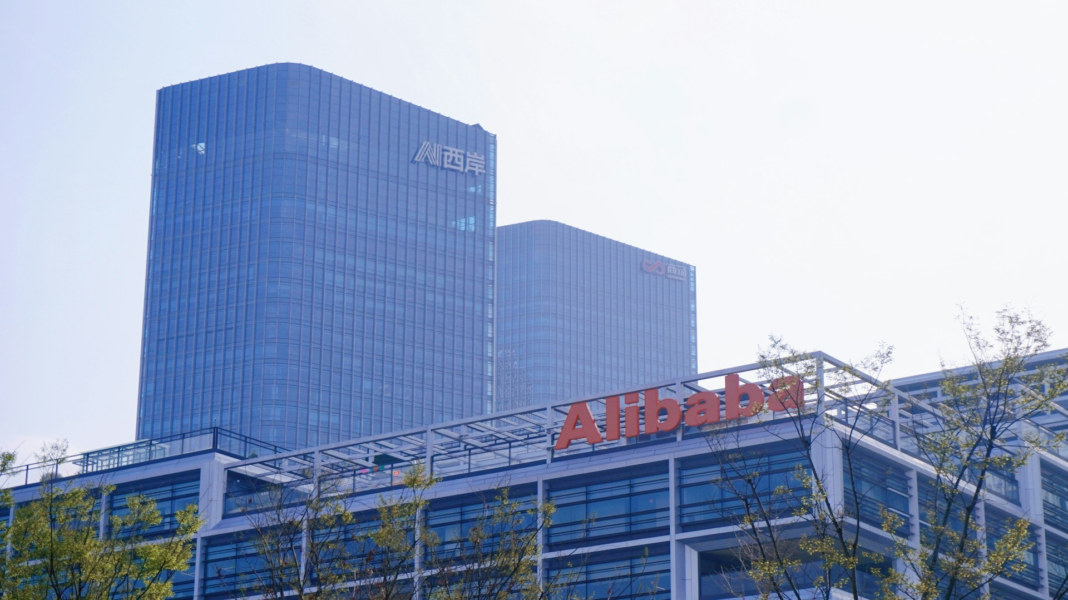
Alibaba is reportedly preparing to ban Anthropic’s Claude Code from its internal workplace environments starting July 10, 2026, over alleged embedded backdoor risks. The company has not officially confirmed the decision and did not respond to media queries at the time of publication.
The controversy follows claims that Claude Code, Anthropic’s command-line AI coding assistant, may contain hidden mechanisms that detect specific network environments. The allegations originated from a June 30 Reddit post by a user identified as “LegitMichel777,” who claimed to have reverse-engineered the tool while restoring a disabled remote-control feature. The researcher alleged that Claude Code versions since 2.1.91 silently checked user proxy configurations and system time zones against concealed identifiers linked to Chinese enterprises, including Alibaba, Baidu, ByteDance, and Moonshot AI.
The alleged mechanism reportedly did not transmit explicit telemetry. Instead, it encoded detection results by modifying internal system prompts, including subtle changes to date formats or punctuation. Security analysts said that approach could make detection difficult because the signaling would not look like ordinary data exfiltration. Anthropic has not issued a formal public statement addressing the claims, though a Claude Code team member reportedly said the mechanism was intended to prevent account abuse, model distillation, and unauthorized access.
The timing is notable because Anthropic recently accused entities linked to Alibaba’s Qwen AI lab of large-scale model distillation, allegedly using nearly 25,000 accounts and generating more than 28 million interactions in six weeks. Alibaba has not publicly responded to those allegations. No independent cybersecurity firm has confirmed the alleged backdoor or validated the reverse-engineering claims, leaving open whether the feature was a defensive anti-abuse mechanism, an unintended privacy risk, or something more serious.
Who is affected
Alibaba employees and internal development environments would be directly affected if the reported ban is implemented.
Other Chinese enterprises named in the alleged concealed identifiers may also review their exposure, especially if they use Claude Code in sensitive internal engineering environments.
The broader issue affects organizations using AI coding assistants in development workflows, particularly companies with sensitive source code, proprietary models, regulated data, or strategic technology projects.
Why CISOs should care
This case shows how AI coding assistants are becoming part of the enterprise security perimeter. These tools can access source code, development environments, prompts, local context, command-line workflows, and potentially sensitive internal signals.
For CISOs, the key concern is not only whether the specific allegation is proven. The larger issue is that AI developer tools can contain hidden or poorly disclosed behavior that may be difficult to detect through traditional monitoring.
The alleged use of prompt-level signaling is especially important because it would not look like ordinary network telemetry. If tool behavior is encoded inside prompts, outputs, or formatting changes, security review needs to go beyond standard endpoint and network checks.
The case also highlights the need for independent validation. No third-party cybersecurity firm has confirmed the alleged backdoor, which means organizations should avoid panic but still treat AI coding tools as high-risk software requiring governance.
3 practical actions
- Review AI coding assistant use in sensitive environments: CISOs should identify where tools like Claude Code are used, what repositories or systems they can access, and whether they are permitted in regulated, proprietary, or national-security-sensitive workflows.
- Require transparency and vendor assurance: Organizations should ask AI tool vendors for documentation on telemetry, environment detection, anti-abuse mechanisms, data handling, and embedded security controls before allowing deployment.
- Test and monitor developer tools like enterprise software: Security teams should review AI coding assistants for unexpected network behavior, local environment checks, prompt manipulation, update mechanisms, and access to secrets, source code, and internal systems.
Read more about AI’s role in cybersecurity:
- OpenAI Previews GPT-5.6 Sol With Restricted Access and Stronger Cyber Safeguards
- Claude Fable 5 Builds Windows-Compatible Rust Kernel in Minutes
- Anthropic Releases Claude Fable 5 With Guardrails for Cybersecurity and Biology
- Upwind’s AI Sensor for Endpoints Seeks to Close the Distance Between Endpoint and Cloud Security

John Kevin Hao is a news and feature writer covering cybersecurity, technology, and business targeted for professional audiences.