
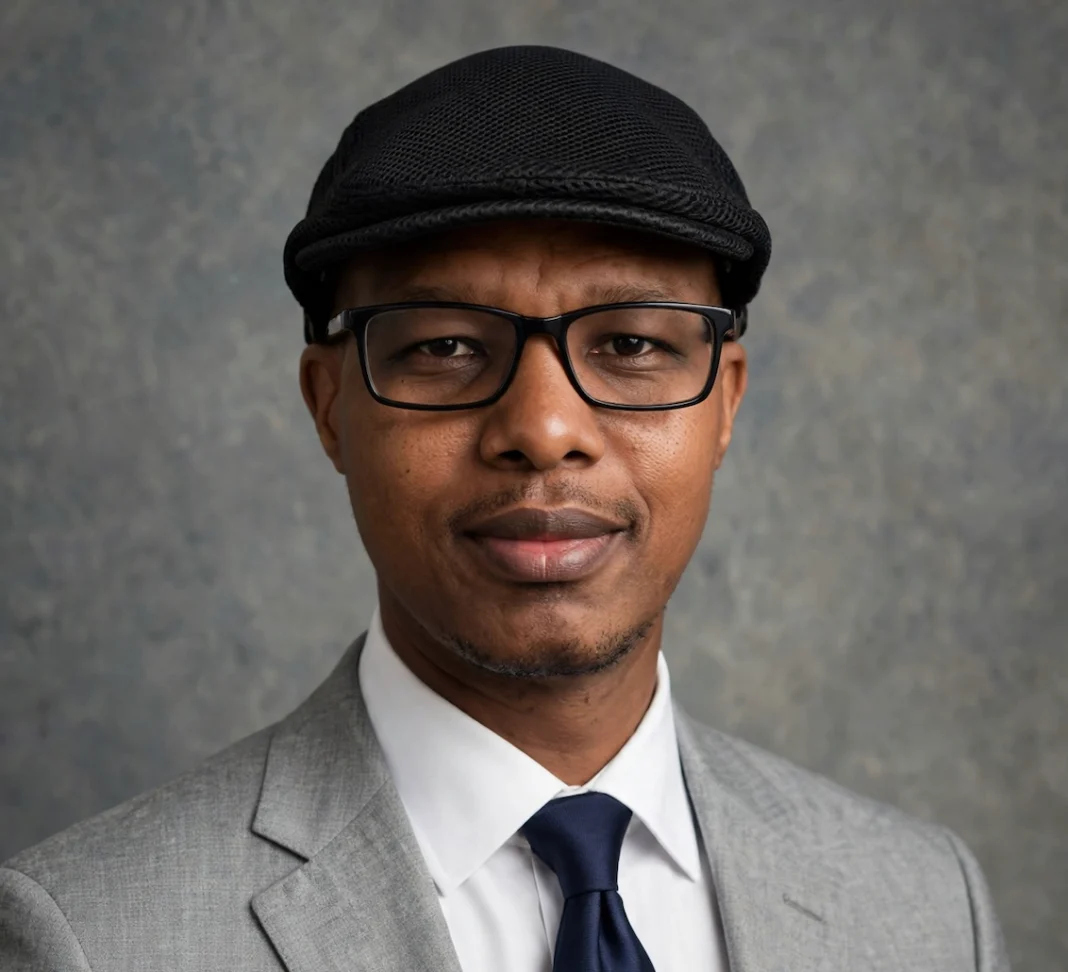
Dr. Jackson Muhirwe is the Chief Information Security Officer (CISO) and Executive Director of Information Assurance at the University of California, Santa Barbara (UCSB), where he leads the university’s cybersecurity and information assurance programs supporting research, teaching, administration, and healthcare.
With more than 25 years of experience in information technology and leadership, including over 15 years focused on cybersecurity, Dr. Muhirwe has held senior cybersecurity leadership positions across higher education, healthcare, and government. Before joining UCSB in 2024, he served as CISO at the University of California, Merced, Deputy CISO at the University of California, Davis, and Chief Information Security Officer for the City and County of San Francisco.
Dr. Muhirwe holds a Ph.D. in Computer Science and is a Certified Information Systems Security Professional (CISSP) and Certified Chief Information Security Officer (C|CISO). He has also served as a university professor and continues to contribute to higher education as an adjunct faculty member, teaching information technology and cybersecurity.
His professional interests include cybersecurity strategy, enterprise risk management, research security, cyber resilience, and the responsible adoption of emerging technologies, particularly artificial intelligence. He is a strong advocate of people-centered cybersecurity leadership and believes that effective security programs must balance technology, organizational resilience, and the people they serve.
Early in his career, Dr. Muhirwe believed the right tools, processes, and people could prevent every breach. Experience taught him otherwise, and the goal he now works toward is a cyber-resilient organization rather than a breach-proof one. As CISO and Executive Director of Information Assurance at the University of California, Santa Barbara, he applies that thinking across research, teaching, administration, and healthcare, drawing on earlier CISO roles at UC Merced and the City and County of San Francisco.
For CISO Diaries, Jackson opens up about the audit and compliance load that takes most of his mental energy right now, why shadow AI keeps him up at night, and the habit he never skips: checking in on how his team is doing. He also shares how faith shapes his leadership, and why he expects security professionals a decade from now to spend their days supervising AI agents rather than doing the repetitive work themselves.
How do you usually explain what you do to someone outside of cybersecurity?
I explain cybersecurity as protecting people, information, and the systems they depend on when using computers, digital services, and the Internet. At its core, cybersecurity is about creating a safe and trusted digital environment where people and organizations can operate, innovate, and achieve their goals without unnecessary risk.
What does a “routine” workday look like for you, if such a thing exists?
There is rarely a truly routine day. My work involves participating in meetings to support ongoing campus initiatives, reviewing security reports, attending governance and operational meetings, overseeing investigations, and working with my team on strategic and operational projects. I also respond to issues and inquiries that require CISO-level attention. A significant part of my day is spent collaborating with campus leadership, understanding emerging risks, and ensuring that our security priorities align with the university’s mission.
What part of your role takes the most mental energy right now?
One area that demands considerable attention is regulatory compliance and audit readiness. Higher education and research institutions operate in an increasingly complex regulatory environment, with growing expectations from government agencies, research funding organizations, and other stakeholders. I spend considerable time reviewing audit inquiries, coordinating responses, and ensuring that our security controls and practices align with applicable requirements. The challenge is balancing these obligations while ensuring that we continue to advance our strategic security initiatives.
What’s one security habit or routine you personally never skip?
Checking in with my team and paying attention to how people are doing. Cybersecurity is a demanding profession, and the people doing this work are often dealing with significant pressure. I make it a point to stay connected with my team, understand their challenges, and recognize when someone may need support. I believe that taking care of people is an essential part of building a strong and resilient security organization.
What does your own personal security setup look like?
At a personal level, my security practices reflect many of the same fundamentals I advocate for and implement professionally. When you are a cybersecurity professional, you don’t simply switch off when you get home. The security principles you practice at work naturally carry into your personal life.
I practice good password hygiene by using unique passwords managed through a password manager, enabling multifactor authentication (MFA), maintaining both online and offline backups, and building redundancies to ensure that I can recover when something goes wrong. Ultimately, I believe that good security habits should be part of everyday life, not just something we practice in the workplace.
What book, podcast, or resource has influenced how you think about leadership or security?
The Bible has influenced my thinking more than any other book. It is a collection of 66 books filled with stories of triumph, failure, faith, human relationships, and life lessons. I have drawn valuable lessons about leadership, personal growth, perseverance, aspiration, and servant leadership from its teachings.
I read the Bible regularly for inspiration, wisdom, and guidance as I navigate the challenges of being a CISO, a father, a husband, and a member of my community.
Beyond the Bible, I listen to several podcasts, particularly the John C. Maxwell Leadership Podcast, the late Eric Cole’s Life of a CISO, and the CISO Series. These resources offer valuable perspectives on leadership, the evolving cybersecurity landscape, and the challenges facing security executives.
What’s a lesson you learned the hard way in your career?
Early in my cybersecurity career, I believed that with the right tools, processes, and people, I could prevent every security breach. Experience taught me otherwise. No organization is completely immune to a breach.
I learned that our goal should not be to build a breach-proof organization, but rather a cyber-resilient one. We must focus on reducing risk, detecting threats early, responding effectively, and recovering quickly when incidents occur. That shift in thinking fundamentally changed how I approach cybersecurity leadership.
What keeps you up at night right now, from a security perspective?
Unmitigated risks, particularly the growing use of shadow AI. Employees are increasingly adopting AI tools to improve productivity, often without the organization’s knowledge or oversight. While AI presents tremendous opportunities, its uncontrolled use introduces risks involving sensitive data, privacy, intellectual property, and regulatory compliance.
My concern is not that organizations will adopt AI, but that they may adopt it faster than they can establish the governance, visibility, and security controls needed to use it responsibly.
How do you measure whether your security program is actually working?
I measure success by the organization’s ability to withstand disruption, respond effectively to incidents, and recover quickly while maintaining its critical business processes. Cybersecurity effectiveness is not simply about the number of threats blocked or vulnerabilities remediated. It is also about how well an organization can continue fulfilling its mission when something goes wrong.
Ultimately, resilience is a critical measure of a successful security program.
What advice would you give to someone stepping into their first CISO role today?
Care about people first. Technical expertise is important, but soft skills, emotional intelligence, communication, and relationship-building are equally important, if not more so, for a successful CISO.
You are not hired to be the organization’s chief security engineer. You are hired to be a leader. Leadership is fundamentally about people, relationships, influence, and the ability to bring others along.
The CISO is an organizational business leader responsible for leading the security function, reducing business risk, enabling the organization’s mission, and ultimately increasing organizational value. Learn the business, build relationships, understand the organization’s risk appetite, and make security an enabler rather than an obstacle.
What do you think will matter less in security five to ten years from now?
I believe routine, repetitive, and largely manual security tasks will matter less as AI and automation become increasingly capable of performing them. However, I do not believe the importance of human leadership will diminish.
At the end of the day, everything we do in technology and cybersecurity is ultimately in service of humanity. I do not see AI replacing people; I see people leveraging AI to become more effective and productive. Human judgment, accountability, ethical decision-making, and leadership will remain essential in guiding this transition.
Looking ahead 10 years, what do you believe security teams will spend most of their time on that they don’t today?
I believe we will see mature AI agents becoming an integral part of Security Operations Centers (SOCs). Rather than spending much of their time performing repetitive operational tasks, security professionals will increasingly manage, supervise, and coordinate AI agents that support threat detection, investigation, analysis, and response.
The routine and repetitive work will increasingly be delegated to AI agents, allowing security professionals to focus on complex investigations, strategic risk decisions, and higher-value activities.
I believe the winning organizations will be those that invest in both people and AI. Technology alone will not be the differentiator. Organizations that successfully combine human expertise, leadership, and intelligent automation will be better positioned to navigate the cybersecurity challenges of the future.
More CISO Diaries:
- CISO Diaries: Elliott Franklin on Why Technology Comes Last in Security Leadership
- CISO Diaries: Tamoor Sarfraz on Securing the Systems Behind Essential Operations
- CISO Diaries: Monica Verma on AI Governance, AI Security, Resilience, and Building for Chaos
- CISO Diaries: Kristin Lowery on Resilience, Leadership, and the Future of Cyber Risk
- CISO Diaries: Jason Stradley on Turning Cybersecurity into a Business Decision

John Kevin Hao is a news and feature writer covering cybersecurity, technology, and business targeted for professional audiences.