
Security leadership today is no longer confined to the SOC or the IT organization; it increasingly sits at the intersection of boardrooms, regulators, and emerging technologies like AI. CISO Diaries was created to capture that reality. This interview series goes beyond frameworks and headlines to explore how senior security leaders think, operate, and make decisions under pressure. By spotlighting daily rhythms, leadership philosophies, and real-world tradeoffs, CISO Diaries offers an inside look at how modern CISOs translate cyber risk into business resilience, especially in complex, highly regulated environments.
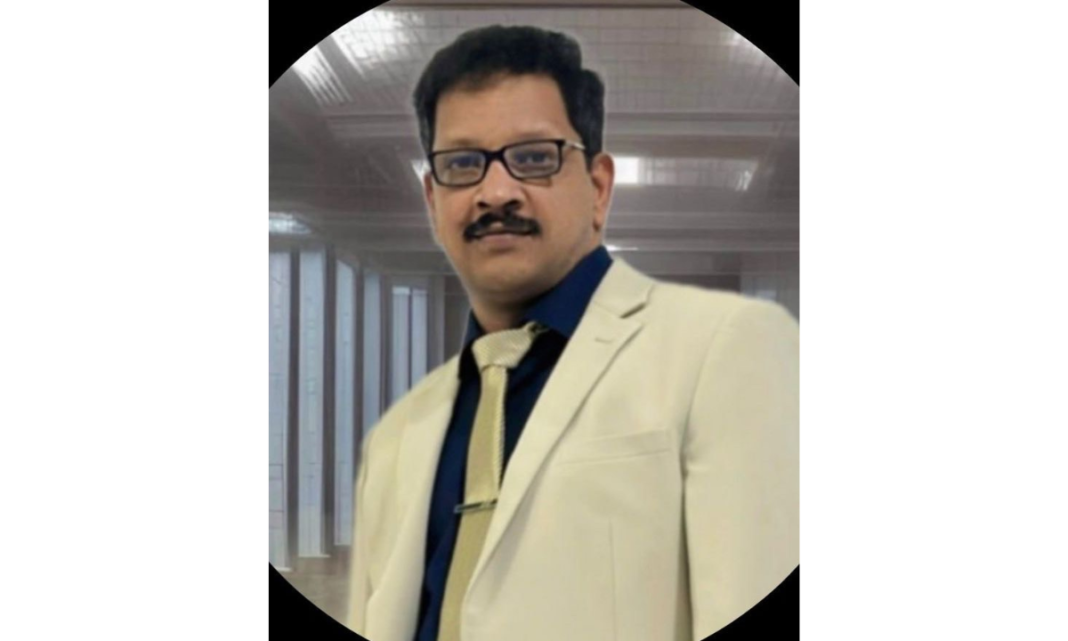
About the Interviewee: Gokul Vasudev
Gokul Vasudev is a strategic CISO and board advisor with over 21 years of global experience spanning the Middle East, Africa, and India. Known for driving enterprise-scale and national-level security initiatives, he has led and advised organizations across government, BFSI, healthcare, and fintech on cybersecurity architecture, AI governance, data privacy, and cyber risk quantification.
Currently working as an AI Governance and GRC Strategy Consultant based in Dubai, Gokul partners closely with C-level executives to align security outcomes with measurable business value, helping organizations navigate regulatory readiness, adversarial AI risk, and resilience at scale. His work is defined by a rare ability to translate complex technical risk into clear board-level strategy, unifying technology, compliance, and execution with precision.
How do you usually explain what you do to someone outside of cybersecurity?
I usually explain cybersecurity using a simple analogy: a car.
A modern car has airbags, seatbelts, ABS, GPS, reverse cameras, and alarms—each serving a specific safety purpose. Cybersecurity works the same way for digital assets.
We protect data, systems, and business operations using multiple layers—identity controls, monitoring, detection, response, and governance—so organizations can operate safely in a digital world.
What does a “routine” workday look like for you, if such a thing exists?
In cybersecurity, there is no true routine.
While there may be scheduled activities like reviews or governance meetings, most of the day is spent responding to evolving threats, advising stakeholders, assessing risks, and adapting defenses to new attack techniques.
Cybersecurity is dynamic by nature—driven by attackers, technology change, and business priorities.
What part of your role takes the most mental energy right now?
Balancing expectations with reality.
Many organizations expect a CISO to manage enterprise-wide security with limited budgets, resources, and authority. A significant amount of mental energy goes into aligning leadership, securing buy-in, and translating cyber risk into business impact so that the right architectural and investment decisions are made.
What’s one security habit or routine you personally never skip?
Continuous learning.
Every day, I make it a point to learn something new—whether it’s a threat technique, an attack surface, a regulatory update, or an emerging technology. In cybersecurity, staying current is not optional.
What does your own personal security setup look like?
At a high level: strong identity hygiene, password management, MFA, backups, and device security.
Beyond that, I follow personal security frameworks tailored to my risk profile. Some elements are intentionally not shared publicly for obvious security reasons.
What book, podcast, or resource has influenced how you think about leadership or security?
More than any single book or podcast, real-world experience has shaped my thinking.
Leadership and security maturity are built through daily decision-making, failures, recovery, and long-term accountability—not theory alone.
What’s a lesson you learned the hard way in your career?
Cybersecurity is not just a career—it’s the heartbeat of an organization.
When security fails, business fails. Understanding this early changes how you design programs, communicate risk, and take responsibility.
What keeps you up at night right now, from a security perspective?
True zero-day attacks.
Unknown vulnerabilities, when exploited at scale, create intense pressure—but they are also moments where experienced security teams prove their value. Many professionals quietly thrive in these situations because preparation meets execution.
How do you measure whether your security program is actually working?
No program can guarantee 100% security.
However, a well-defined architecture, supported by the right technologies, aligned with standards and frameworks, continuously tested and improved, puts an organization in a defensible and resilient position.
What advice would you give to someone stepping into their first CISO role today?
Start now—don’t wait for perfection.
Focus on progress, prioritization, and stakeholder alignment rather than trying to fix everything at once. Avoid blame; build trust and momentum.
What do you think will matter less in security five to ten years from now?
Buzzwords and tool names.
Technologies will change, but foundational principles—identity, risk management, governance, and resilience—will remain. Chasing trends without architecture will matter less.
Looking ahead 10 years, what will security teams spend most of their time on?
Managing autonomous and advanced threats, including:
- Zero-day exploitation at scale
- AI-driven attacks and governance
- Cyber insurance and financial risk modeling
- Post-quantum cryptography
- OT and ICS security
Security will increasingly intersect with enterprise risk, finance, and governance—not just IT.