
Security leadership is often framed through incident reports, threat statistics, and compliance milestones, but those snapshots rarely capture what it truly means to carry responsibility for protecting modern organizations. CISO Diaries was created to go deeper. This interview series explores the lived experiences of today’s security leaders, spotlighting how they structure their time, manage uncertainty, build resilient teams, and maintain clarity in roles defined by constant pressure.
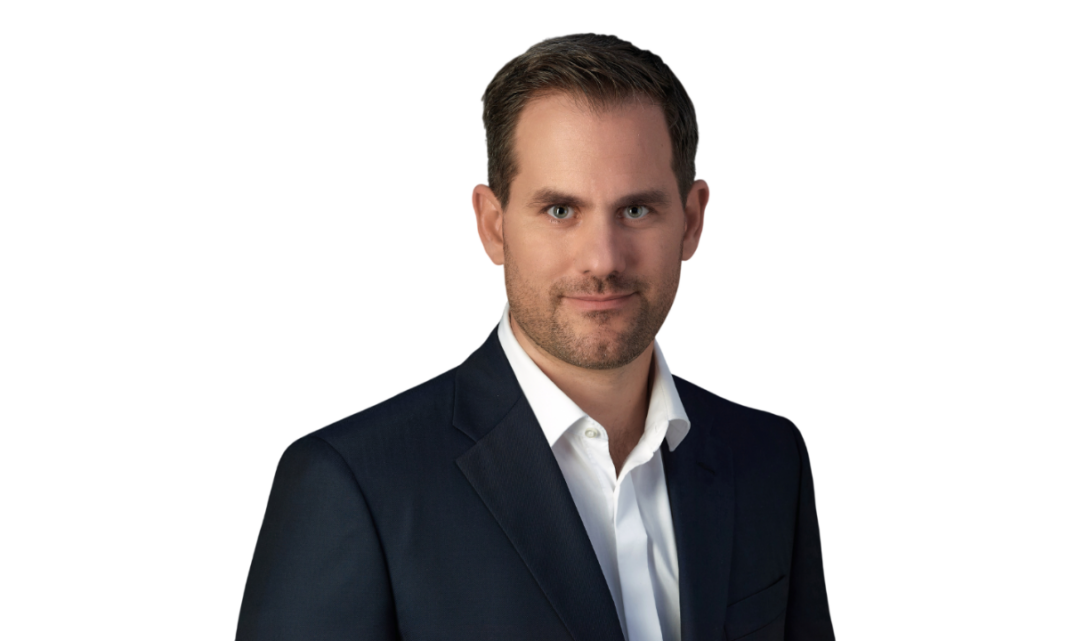
In this edition, we speak with Peter Egyed, whose perspective reflects the reality that cybersecurity is less about preventing every fire and more about ensuring organizations can withstand and recover from them. His approach blends technical rigor with practical realism, emphasizing preparation, continuous testing, and the critical importance of people in defending against evolving threats.
About the Interviewee: Peter Egyed
Peter Egyed (he/his) is the Chief Security Officer at Erste Magyarország, bringing deep expertise across cybersecurity, risk management, and enterprise resilience. Holding certifications including CISA, CISM, CEH, and OSCP, Peter is known for combining technical depth with a pragmatic, operations-focused leadership style.
At Erste, Egyed leads security strategy and execution across a 24/7 threat landscape, focusing on strengthening organizational preparedness, testing real-world resilience, and building battle-ready security teams. With a strong belief that cybersecurity is ultimately a human challenge as much as a technical one, Peter prioritizes education, practical validation of defenses, and adaptive strategies that keep pace with rapidly evolving risks driven by AI, geopolitics, and emerging technologies.
How do you usually explain what you do to someone outside of cybersecurity?
I usually tell people that it’s better if you don’t understand what I’m doing, because if you start to understand and ask me for help, that usually means you are in trouble already. In reality, I explain that I run a very expensive digital insurance policy where the house is constantly on fire, but my job is to make sure the flames stay outside the walls, and the building doesn’t collapse. If I do my job perfectly, absolutely nothing happens inside, and everyone wonders why the company pays me.
What does a “routine” workday look like for you, if such a thing exists?
Firstly, there is no such thing as a workday. We operate on a 24-hour basis, so instead of fixed routines, I determine different statuses that drive my time:
- Peace time: During this period, we focus on preparation for the worst-case scenarios.
- War time: We aim to return to peacetime status, utilising all our resources and knowledge acquired during peacetime.
What part of your role takes the most mental energy right now?
The Human Factor. I can spend $10 million on the most sophisticated AI-driven endpoint protection, but it’s all useless in the moment Dave from the back office clicks on an email promising a $50 Starbucks gift card from a sender named [email protected]. Managing human curiosity is exhausting. The education process is one of the most important. But it’s also extremely mentally hard because most people don’t know what they are facing, and they don’t know what a single misclick can cause. They believe technology will protect them from everything. Hard to explain to them that there is no silver bullet and there is no bulletproof shield against all kinds of threats.
What’s one security habit or routine you personally never skip? (Work or personal.)
Proper risk assessment on everything. I always make my decisions based on the actual risks both in my personal and professional life. It helps me to avoid a lot of trouble.
What does your own personal security setup look like? (Password manager, MFA, backups, devices, at a high level.)
I always use extremely long, randomly generated passwords and store them in password managers protected by MFA. Also, I try to protect my family, especially my kids, with content filtering and other restrictions. They don’t really like it, but my statement is very clear here: you can use gadgets under my supervision, or you won’t use any gadgets that have an IP address until you learn how to protect yourself. There is a side mission or gamification too: If they can bypass the control environment and share the method with me, they get rewards and extra iPad time. I find the child’s mind extremely powerful, as they think very differently from adults and sometimes find very creative ways to get somewhere or to get permission to do something.
What book, podcast, or resource has influenced how you think about leadership or security? (Doesn’t have to be technical.)
Nowadays, I try to learn from other managers and leaders in totally different fields, outside of cybersecurity. I realised that cybersecurity folks have a specific way of thinking, but it’s not the one and only way to act. People in other roles and environments are behaving very differently in similar situations, and adopting those methods could open new ways of problem-solving in my field as well.
What’s a lesson you learned the hard way in your career?
Never enough testing… I know it’s old, but gold. Even if you think you tested out well, something, there can be special circumstances in a production environment, and the whole operation can stop. You won’t believe this until you burn yourself. I have my own wounds already, so… never enough testing!
What keeps you up at night right now, from a security perspective?
The extremely fast-changing world: AI, Quantum, Geopolitics, Technology changes, Supply chain risks, lack of experts, and so on and so forth… Lots of things concern me nowadays, but most of all, they’rew happening so fast. Predicting the future is increasingly difficult because of the speed of change.
How do you measure whether your security program is actually working?
As I already mentioned, testing is never enough. I don’t believe in paper-based checkboxes. I believe in the practical approach. Do you have a new endpoint protection tool? Test the hardening of it. Do you have the most advanced IR process? Organise a red team exercise to test your team. Do you think you are prepared for a disaster recovery? Do a recovery and check the time and quality for real. Those practical metrics reflect reality, and you can measure your progress on your security program journey.
What advice would you give to someone stepping into their first CISO role today?
Keep your focus on your team! It’s the most important. Cybersecurity is NOT a one-man show. Technology is also important, but without a prepared, battle-hardened, and battle-tested team, the technology itself is totally useless and only a waste of money.
In case of wartime, technology won’t save your life alone; your expert team will. Be prepared mentally for hard times and hard decisions. Being a CISO/CSO is not an easy role; it can sometimes be depressive and lonely. Most people won’t notice your performance if you are doing well, and you have to accept that. Never forget this quote by Bruce Schneier:
“It takes years to build a reputation and only minutes to ruin it with a poorly handled security breach.”
Find your own satisfaction in your role! That’s the key to doing it in longterm.
What do you think will matter less in security five to ten years from now?
The traditional password. We are moving toward a world of biometrics and device-based authentication. I look forward to the day I never have to remind a grown adult that their dog’s name followed by an exclamation point is not “military-grade encryption.”
Looking ahead 10 years, what do you believe security teams will spend most of their time on that they don’t today?
We will spend most of our time fine-tuning AI-to-AI warfare. It won’t be a human trying to phish a human; it will be my defensive AI trying to outmaneuver an offensive AI that is generating 10,000 deepfake videos of our CEO per second. We’ll basically be the referees in a robot wrestling match.