
Cybersecurity today sits at the intersection of speed, scale, and uncertainty. In CISO Diaries, we go beyond surface-level discussions to understand how security leaders operate in real environments, where decisions must be made quickly, risks are constantly evolving, and the stakes extend far beyond technology. This series explores how CISOs navigate complexity, from managing expanding attack surfaces to aligning security with business growth and resilience.
By focusing on daily rhythms, hard-earned lessons, and forward-looking perspectives, CISO Diaries highlights what it truly takes to lead security at scale. Because modern CISOs are no longer just defenders; they are strategic advisors, responsible for enabling innovation while ensuring organizations remain secure, compliant, and resilient in the face of constant change.
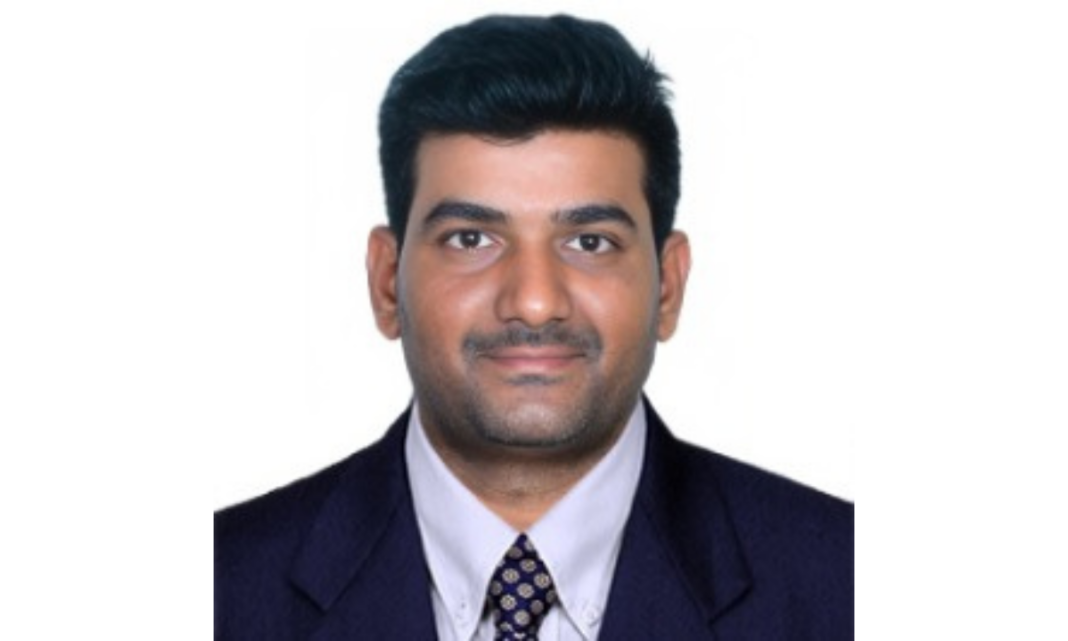
About Ravindra Kumar
Ravindra Kumar is a Chief Information Security Officer and cybersecurity strategist based in Dubai, with over 17 years of experience architecting enterprise security programs across global, high-stakes environments. He currently operates as a vCISO, advising organizations across the UAE on cloud security, AI governance, and Zero Trust architecture, with a strong focus on aligning cybersecurity initiatives with business and regulatory priorities.
Throughout his career, Ravindra has led large-scale transformations, including a $300M+ cloud migration program for a Fortune 500 insurance organization, where he reduced vulnerabilities by 25% and improved incident response times by 30%, all while supporting uninterrupted service for tens of millions of customers. With expertise spanning frameworks such as NIST, ISO 27001, TOGAF, and SABSA, he is known for translating complex technical risk into strategic guidance for boards, helping enterprises scale securely while maintaining trust, resilience, and operational continuity.
How do you usually explain what you do to someone outside of cybersecurity?
I help businesses develop while keeping them safe from digital dangers. In this way, you can see that all businesses nowadays depend on data and technology. My job is to make sure that the foundation is strong, safe, and reliable so that the business can move quickly without tumbling over. I’m not simply eliminating hackers; I’m also helping executives make smart choices about risk so they can confidently pursue new opportunities.
What does a “routine” workday look like for you, if such a thing exists?
In this field, “routine” is a kind word. I usually start my day by reviewing security operations, including any incidents that happened overnight, updates on threat intelligence, and the health of our detection systems. After that, the day fluctuates between strategic tasks—like governance frameworks, board presentations, and vendor assessments—and tactical goals, such as incident response, policy reviews, and team alignment. I spend a significant amount of effort translating technical risks into business language for executives. The one constant is moving between the big picture and the small details.
What part of your job takes the most mental energy right now?
Maintaining operational resilience while managing the growing attack surface. The scope keeps expanding: AI agents, non-human identities, OT environments, and third-party integrations. In the average business, there are now 82 machine identities for every human employee. However, most companies still rely on rules and frameworks designed for people who “clock in and leave.” To balance proactive strategy with reactive defense across all these areas, you must keep setting strict priorities.
What’s one security habit or routine you personally never skip? (Work or personal.)
Auditing access and rights. I constantly verify who has access to what in both my personal and business accounts to ensure they still require it. One of the most prevalent attack vectors is the use of overprivileged accounts, but you can stop them with consistent discipline and the principle of least privilege.
What does your own personal security setup look like? (Password manager, MFA, backups, devices, at a high level.)
I use a password manager for everything to ensure unique, strong passwords for every account. I employ hardware MFA tokens for critical accounts and authenticator applications for the rest. My backups are encrypted and stored in several locations on a regular basis. I keep all devices updated and strictly segmented—I never use the same systems for work and personal tasks. These are basic principles, but the key is that they are always followed.
What book, podcast, or resource has influenced how you think about leadership or security? (Doesn’t have to be technical.)
I’ve learned a lot from numerous technical and leadership books, industry contributors, content creators, vendors, and peers. Beyond technical resources, I rely on groups like ISC2, ISACA, the Cloud Security Alliance, and SANS. These communities help me stay current and “stress-test” my ideas from different perspectives. The NIST frameworks—especially the CSF, RMF, AI RMF, and Zero Trust Architecture papers—along with ISO standards and the FAIR model, have fundamentally changed how I quantify risk and governance.
What’s a lesson you learned the hard way in your career?
Assuming that cybersecurity is a support function like other IT jobs. At first, I thought of security as a technical field separate from the business. In truth, security is directly responsible for corporate success, protecting the brand, and reaching organizational goals. When security doesn’t line up with company objectives, it becomes a friction point instead of a facilitator. That shift in my mindset impacted everything about how I do the job.
What keeps you up at night right now, from a security perspective?
To be honest, the growing range of security responsibilities: maintaining brand reputation, dealing with insider threats, external attack surfaces, and the rise of non-human identities. We are in a time of maximum vulnerability because enterprises are adopting AI at a large scale while security standards are still 18 to 24 months behind. It is vital to have governance for generative AI. CISOs must incorporate AI controls into their current risk frameworks, ensure secure-by-design principles apply to all cloud and AI installations, and strengthen awareness programs to deal with insider abuse. Furthermore, the CISO is increasingly in charge of OT and critical infrastructure security, which requires aligning IT and OT teams and gaining visibility into legacy environments.
How do you measure whether your security program is actually working?
I look at several factors: a measurable decrease in vulnerabilities, the average time to detect and respond to events (MTTD/MTTR), laws & regulatory, compliance with standards like ISO 27001 and NIST, and business alignment metrics. Specifically, are we helping the company move faster? I also monitor maturity growth over time. But the key test is whether the board sees security as a strategic partner instead of a cost center. Your program isn’t working if you are only summoned to the room when something goes wrong.
What advice would you give to someone stepping into their first CISO role today?
From the start, make it clear that you intend to be a strategic partner. Cybersecurity should be seen as a driver for growth, resilience, and trust—not just defense. Learn how to translate technical issues into business goals and provide a clear return on investment (ROI). Build relationships with the board and executive team before you need them in a crisis. Finally, invest heavily in governance structures early on. Without governance, innovation is just mismanaged risk.
What do you think will matter less in security five to ten years from now?
Manual defensive action. There will be too many threats moving too quickly for human-only security operations to be effective. As vendor consolidation speeds up, point solutions and segregated technologies will matter less. Companies will prioritize centralized visibility and control over “best-of-breed” fragmentation. There will also be less focus on compliance as a checkbox exercise; regulators and boards will demand real-world resilience, not just paperwork.
Looking ahead 10 years, what do you believe security teams will spend most of their time on that they don’t today?
Managing autonomous systems. AI agents, non-human identities, and multi-agent architectures will perform the bulk of business operations. Security teams will spend their time managing machine identities, monitoring autonomous decision-making, and ensuring that systems capable of creating sub-agents are held accountable. The question won’t be “Are we using AI?” but “Do we know about and control every AI agent working in our environment?” That is the new frontier.