
Cybersecurity leadership in the public sector carries a unique weight. Beyond protecting systems and data, it often means safeguarding essential public services that millions of people rely on daily. CISO Diaries explores how security leaders navigate that responsibility by spotlighting their routines, leadership philosophies, and decision-making frameworks in an era where threats evolve faster than ever. The series aims to humanize the role of the modern CISO, showing how these leaders balance operational pressure, team development, and strategic foresight while protecting the organizations and communities they serve.
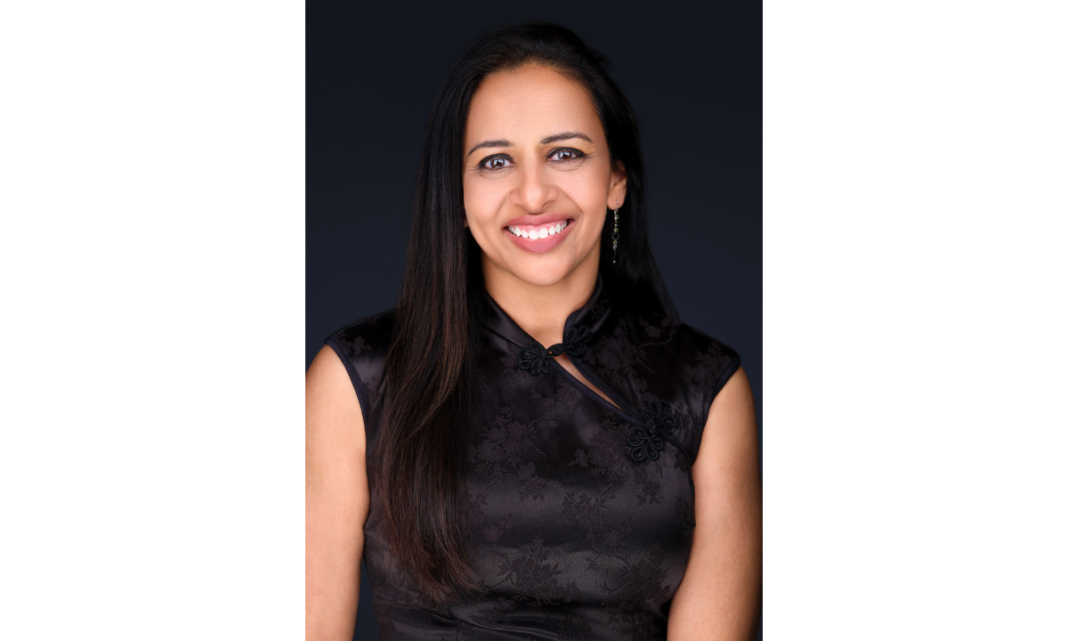
In this edition of CISO Diaries, we speak with Seema Patel, who offers a grounded, mission-driven perspective on cybersecurity leadership within government infrastructure. Her approach blends operational discipline, people-first leadership, and a strong focus on enabling data-driven decision-making while maintaining trust, privacy, and resilience in complex public-sector environments.
About the Interviewee: Seema Patel
Seema Patel serves as the Chief Information Security Officer for Maricopa County, where she leads efforts to protect critical government technology systems and public data. Before stepping into the interim executive role, she served as Assistant CISO, overseeing security architecture and cyber risk management. With more than two decades of experience in program management, primarily across government and healthcare, Seema has spent the last 15 years focusing on using technology to enable data-driven decision-making while ensuring strong security and privacy safeguards.
Known for her collaborative leadership style, Seema prioritizes empowering her teams, removing operational barriers, and aligning cybersecurity initiatives with broader public service missions. Outside her professional responsibilities, she is deeply involved in her community, volunteering as a crisis counselor and animal rescue advocate, and dedicating time to studying Brazilian Jiu-Jitsu and Krav Maga, disciplines that reflect her focus on preparedness, discipline, and resilience, both professionally and personally.
How do you usually explain what you do to someone outside of cybersecurity?
For better or worse, the numerous high-profile data breaches have made cybersecurity a term most people know. For simplicity’s sake, I tell people I manage a team that protects Maricopa County’s technology against attacks.
What does a “routine” workday look like for you, if such a thing exists?
Well, I expect for anybody in my role, there’s no such thing as routine. I try to split each day into 3 buckets: Administrative, Team Support, and Projects & Products.
- Administrative work is the catch-all for the day-to-day operations of the InfoSec Program, including budget management, governance, executive functions, and related tasks.
- The best part of my day is working for my team. My goal as their Exec is to give them the time and space to do their work and to remove obstacles from their path. I’m not getting on the ground with them, but I need to keep them out of the mud.
- Projects and Products include meeting with vendors, reviewing new products in the market, and supporting County operational projects that include cybersecurity controls or services.
What part of your role takes the most mental energy right now?
It honestly depends on the day. Sometimes, what seems simple at the outset sends me down a winding path of rabbit holes that takes up a good portion of my day and my brain cells. I absolutely love problem-solving, even though it can be extremely exhausting. I try to remember that I worked hard to be in this role specifically so I could tackle the issues that slow our progress to success; that means I’ve invited the frustration and gray hairs into my life on purpose.
We’re a large local government organization with many business lines and a wide range of IT systems. We’re all aligned on our mission to serve the public, and the biggest trick for all of us is to make sure we’re doing the right thing the right way.
What’s one security habit or routine you personally never skip? (Work or personal.)
I make it a daily habit to read the news. There’s a lot there that informs cybersecurity, including geopolitical issues, current and emerging threats, and new tech. I also never miss my morning coffee and workout to get my head on straight.
What does your own personal security setup look like? (Password manager, MFA, backups, devices, at a high level.)
I’m so tech-simple that it’s silly. Our team is almost completely WFH, so my setup is a singular laptop. The same security controls we use at work are the ones I use at home. MFA for my accounts, secure network configurations, data backups, and, of course, identity theft monitoring and insurance coverage.
What book, podcast, or resource has influenced how you think about leadership or security? (Doesn’t have to be technical.)
I make it a point to read “How to Make Friends and Influence People” at least once every couple of years. While not all of it holds up in today’s world, some consistent communication skills have helped me forge and maintain relationships.
The other one that stands out the most to me is “It’s Your Ship” by Captain Abrashoff. It’s a great book that has taught me to build a team of people who are smarter and more capable than I am and then get out of their way. It’s not abdicating my responsibilities; it’s trusting that they can be, and want to be, great at their jobs.
What’s a lesson you learned the hard way in your career?
When I first started in management a million years ago, I thought it was important to be the smartest person in the room and that leadership meant telling people what to do. And let me tell you, I was schooled quick and hard. There’s a huge difference between being a boss and being a leader. Leadership is about bringing smart, capable, results-focused people together and banging our heads together to solve things. I’m not worried about somebody trying to take my job; I want people to want my job. Building people up into capable leaders ensures there will always be a strong cyber program for the County.
What keeps you up at night right now, from a security perspective?
Maricopa County is a high-value target, and threat actors are evolving their technical capabilities far faster than we can adapt to them. Government technology is a mixed bag. We’re quickly adopting business solutions to meet demand, but we have limited funds and legacy tech. It’s a tough balance, and one I always worry will tip the wrong way.
How do you measure whether your security program is actually working?
We use KPIs to measure efficiency and efficacy. It’s hard to prove a negative, so we can’t just say success means we didn’t “get hacked” today. We aim to improve culture by testing our workforce, training our developers, and keeping leadership informed and involved. We assess the mean time to identify, the mean time to respond, and the mean time to remediate. We constantly test our security controls against attacks and use standardized frameworks to build consistently.
What advice would you give to someone stepping into their first CISO role today?
Buckle up. The role has changed so much over the last decade. Historically, CISOs came from the tech side, but more and more, CISOs are seen and need to function as executives. That has created a shift from CISOs being “hands-on” technical to letting go of the keyboard and focusing on managing cybersecurity as a business driver.
I recommend that anyone in this role understand their business and its mission and have a strategy. Ensure the strategy is shared and marketed across your organization and with external partners, and focus your efforts on the strategic initiatives that deliver the most value.
What do you think will matter less in security five to ten years from now?
I’d like to be optimistic and say phishing will be a thing of the past over the next 5-10 years. With the adoption of passwordless authentication, MFA, AI-powered anti-phishing, and UEBA, I hope that improved identity and access management will make standard phishing tactics obsolete.
That said, people remain the weakest link. Therefore, I guess that social engineering will continue to be something we’ll need to combat, but it will look different. The tech industry will look different as more legislation is enacted in the US to prohibit technologies developed in countries considered foreign adversaries. This may foster considerable tech growth in the US, EU, and other nations friendly to the West, where products are built with data privacy and system security at the core.
Looking ahead 10 years, what do you believe security teams will spend most of their time on that they don’t today?
With technology advancing at such a rapid pace, it’s somewhat difficult for me to peek into the future 10 years from now. Still, based on what’s happening today, AI will continue to shape data privacy and security.
I would expect Quantum computing to bring both benefit and harm. Stolen data may be encrypted now but can be decrypted later. Who knows what value that data will have over the next 10 years, but I expect there will still be value.
Network speeds continue to grow with the adoption of 5G, and new technologies will have to emerge to meet the demands of faster computing. Faster networks mean faster attacks. With a greater adoption of cloud services and the consolidation of security controls into a smaller number of enterprise platforms, threat actors will not have to look far to compromise entire data repositories. We’ve already seen threat actors combine forces to form loosely knit, business-like service models, with data access brokers and malware authors selling their services. At the same time, the number of new vulnerabilities continues to increase year over year.
Everything from cars to washing machines is going digital, creating more opportunities for new attack vectors, and geopolitical conflicts continue to provide fodder for cyberwarfare. I’m really hoping to be retired and living on a farm with a bunch of rescue animals by then, but you never know.