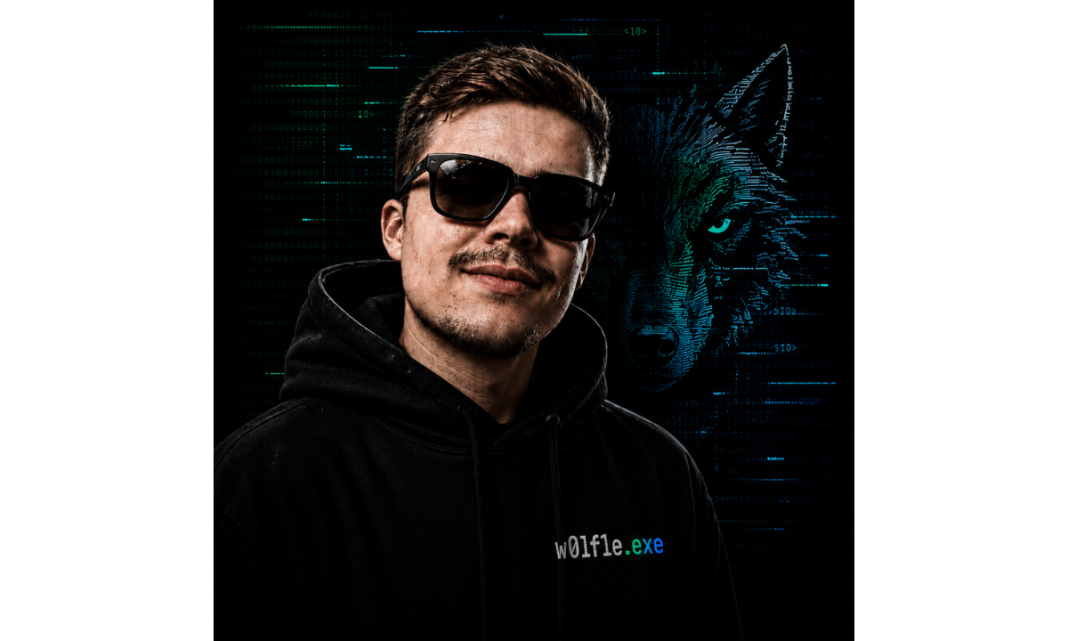
Vincent Swolfs sits at a rare intersection in cybersecurity, where large-scale offensive security meets executive-level risk ownership. As Director of Hacking at cisa.one, he leads a team of more than 350 penetration testers, ethical hackers, and digital specialists focused on systematically breaking systems to strengthen them. In parallel, in his role as Chief Information Security Officer, he is responsible for shaping security governance, resilience, and long-term trust across client environments where risk is constantly evolving in both speed and complexity.
His experience leading one of the larger offensive security organizations in this space is especially valuable for CISO Diaries, as it provides a grounded view into how adversarial thinking is operationalized at scale, and how that perspective translates into enterprise security leadership. Rather than treating hacking and governance as separate disciplines, Swolfs operates in the space where they converge: turning technical findings into business decisions, and translating systemic vulnerabilities into organizational resilience.
In the conversation, he reflects on the tension between rapid innovation and acceptable risk, particularly as organizations accelerate cloud adoption, AI integration, and software delivery. He also discusses the growing industrialization of cybercrime, the shift toward identity-driven attacks, and why technical excellence alone is no longer sufficient without strong communication and stakeholder alignment. Across his answers, a consistent theme emerges: modern security leadership is less about controlling every vulnerability, and more about enabling organizations to move quickly while staying meaningfully protected.
How do you usually explain what you do to someone outside of cybersecurity?
I usually explain it as helping organizations understand and reduce digital risk. Cybersecurity is often perceived as highly technical, but at its core it’s about protecting business operations, trust, and continuity. My role involves helping companies identify vulnerabilities before attackers do, improving resilience, and making informed risk decisions.
What does a “routine” workday look like for you, if such a thing exists?
There’s rarely a truly routine day in cybersecurity. Most days are a combination of strategic planning, reviewing threat intelligence, overseeing client engagements, discussing vulnerabilities and risk posture with teams, and responding to emerging security developments. A large part of the day is also spent translating technical findings into business impact so leadership teams can make informed decisions.
What part of your role takes the most mental energy right now?
Balancing speed and security. Organizations are moving faster than ever with cloud adoption, AI integration, and rapid software development cycles. The challenge is helping businesses innovate without creating unacceptable levels of risk. Prioritization is critical because there’s always more to improve than there is time or budget available.
What’s one security habit or routine you personally never skip?
Verifying before trusting. Whether it’s an email, a request, a login alert, or a system change, I always validate authenticity before taking action. Attackers increasingly rely on human psychology rather than purely technical exploits.
What does your own personal security setup look like?
I keep it relatively simple but disciplined: a password manager with unique credentials for every service, hardware-based MFA wherever possible, segmented devices for sensitive work, encrypted backups, and strict update hygiene across all systems. Good security is more about consistency than complexity.
What book, podcast, or resource has influenced how you think about leadership or security?
One recent book that strongly resonated with me is “The Next-Gen Information Security Professional” by Vincent van Dijk. What stood out to me is the focus on mindset, communication, and business alignment rather than purely technical depth. The book reinforces something I strongly believe myself: modern cybersecurity professionals need to be able to translate technical risk into business value, influence decision-making, and lead organizations through complexity. That shift from being purely technical to becoming strategically valuable is becoming increasingly important in cybersecurity leadership.
What’s a lesson you learned the hard way in your career?
Technical excellence alone is not enough. You can build the most secure system in the world, but if stakeholders don’t understand the business impact or buy into the process, security initiatives fail. Communication and trust are just as important as technical capability.
What keeps you up at night right now, from a security perspective?
The industrialization of cybercrime and the growing accessibility of advanced attack capabilities. Threat actors are becoming more organized, automated, and financially motivated. AI is also lowering the barrier to entry for sophisticated attacks, which changes the scale and speed of the threat landscape significantly.
How do you measure whether your security program is actually working?
A security program is working when risk is consistently reduced over time and the organization becomes more resilient to disruption. Metrics like mean time to detect/respond, vulnerability remediation timelines, phishing resilience, and incident trends matter, but the real measure is whether the business can continue operating securely under pressure.
What advice would you give to someone stepping into their first CISO role today?
Learn the business first. A CISO is not just a technical role; it’s a leadership and risk-management role. Understand how the organization makes money, where its critical dependencies are, and how to communicate security in terms executives care about. Also, build strong relationships early — security cannot operate in isolation.
What do you think will matter less in security five to ten years from now?
Purely perimeter-focused security models. The idea of a clearly defined trusted internal network is already fading. Security will continue shifting toward identity, continuous verification, behavioral analysis, and adaptive risk-based controls.
Looking ahead 10 years, what do you believe security teams will spend most of their time on that they don’t today?
Managing AI-driven systems, autonomous infrastructure, and machine-to-machine trust relationships. Security teams will increasingly focus on validating the integrity and behavior of automated systems rather than only securing human-operated environments. Governance around AI, data authenticity, and digital trust will become central responsibilities.