
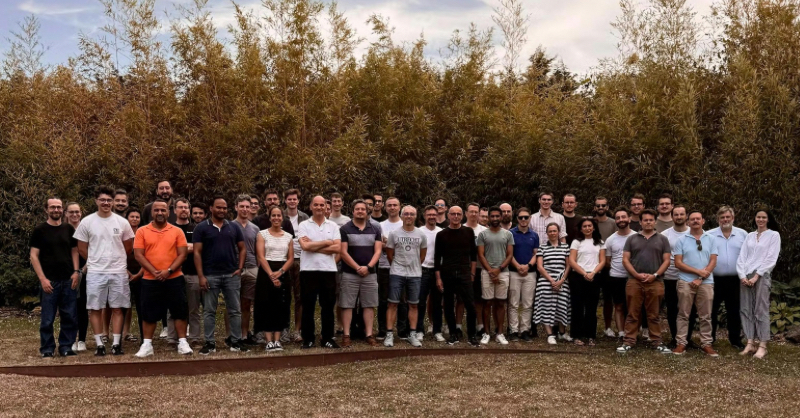
What happened
French aerospace giant Dassault Aviation led a $200 million Series B funding round in Paris‑based defence AI startup Harmattan AI, marking a strategic partnership to accelerate the integration of controlled autonomy and artificial intelligence into next‑generation combat aviation systems. The investment will help Harmattan scale deployments of AI‑enabled missions, expand into new operational domains (like ISR and electronic warfare), and ramp industrial production of autonomous systems.
Who is affected
- Harmattan AI, led by Mouad M’ghari (CEO), with co‑founders Martin de Gourcuff and Edouard Rosset, gains capital and industrial clout to expand its autonomous defence offerings.
- Dassault Aviation and defence partners will integrate Harmattan’s AI stack into platforms including the Rafale F5 and future Unmanned Combat Aerial Systems (UCAS).
- European defence and allied forces stand to see broader deployment of sovereign, controlled autonomy capabilities.
Why CISOs should care
The deal highlights the increasing role of AI in defence systems, where secure, transparent, and governable AI is becoming mission‑critical rather than experimental. Defence‑grade AI introduces complex cybersecurity challenges, from protecting autonomy stacks to securing supply chains and ensuring trustworthy operation under contested conditions. CISOs in defence, aerospace, and critical infrastructure sectors should monitor how AI governance, integration into operational technology (OT), and sovereign control requirements evolve as AI transitions from lab to frontline systems.
3 practical actions for CISOs
- Review AI governance frameworks: Ensure your organization’s AI policies account for controlled, observable, and auditable AI behavior, especially in safety‑critical contexts.
- Assess supply chain risk: Evaluate third‑party AI components and partners for compliance with secure development practices and threat‑model alignment.
- Engage cross‑domain security teams: Facilitate collaboration between IT, OT, and AI engineering teams to build holistic defenses that account for adversarial and operational threats in autonomous systems.