
What happened
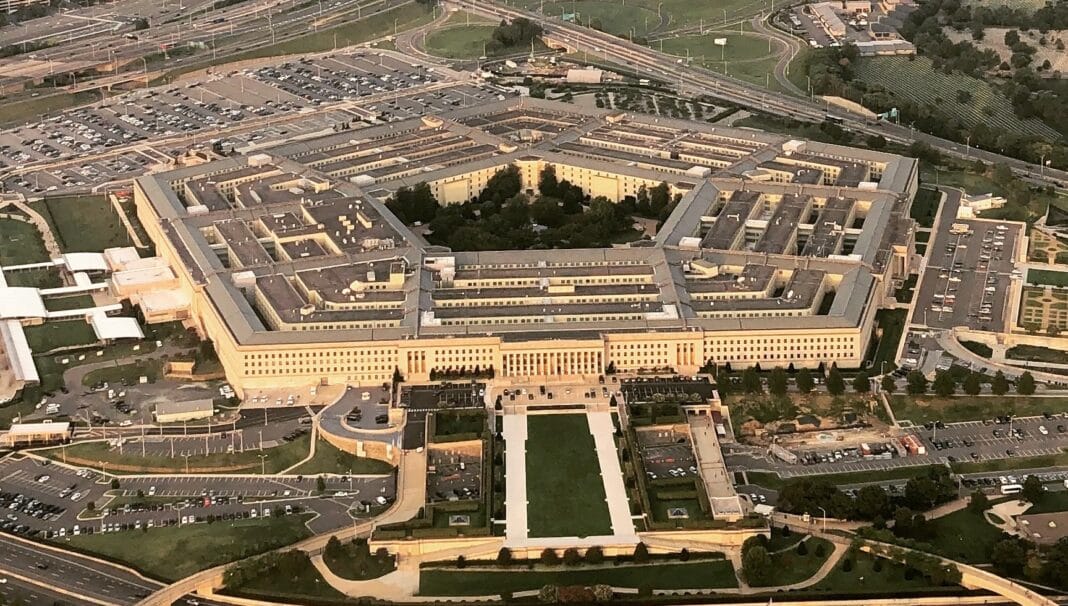
Senior US military leaders are publicly wrestling with how to secure and govern AI systems as the Defense Department moves toward autonomous warfare capabilities, according to remarks made by Chairman of the Joint Chiefs of Staff Gen. Dan Caine at Vanderbilt University’s Asness Summit on Modern Conflict and Emerging Threats.
Caine described autonomous weapons as a “key and essential part of everything we do” going forward, framing the challenge not just as one of capability development but of building digital infrastructure, including command-and-control networks and machine learning models, that can be trusted under adversarial conditions. He also flagged the Pentagon’s growing dependence on privately developed software not originally designed for military use, citing concerns about vulnerabilities, supply chain risks, and adversarial exploitation.
The standoff with Anthropic featured prominently as an illustration of those tensions. Anthropic declined earlier this year to remove restrictions on domestic surveillance and fully autonomous weapons use from its contracts, prompting the Pentagon to designate the company a supply chain risk and the White House to order a federal agency phase-out of its tools. Anthropic challenged the decision in court, and a federal judge temporarily blocked the ban in March. The government has said it intends to appeal. President Trump recently suggested the dispute may be easing, describing Anthropic as “shaping up.” Meanwhile the NSA has reportedly been granted access to Mythos Preview, the model Anthropic itself described as too dangerous for public release, creating a visible contradiction between official policy and operational use.
Caine also pointed to the Pentagon’s own procurement system as an obstacle, arguing that current acquisition frameworks designed for fixed hardware are ill-suited to continuously evolving software and create accountability gaps when failures or vulnerabilities occur. He called for contracts that share risk between government and private companies. Separately, lawmakers have pressed the Pentagon for answers about whether AI systems were used in a deadly strike on an Iranian school during the opening hours of the US-Israel war against Iran, raising questions about how such tools are tested, audited, and governed.
Who is affected
The immediate audience is the US defense industrial base and AI vendors with existing or prospective government contracts. The broader implications extend to any organization operating at the intersection of commercial AI development and national security, including contractors, cloud providers, and technology companies whose tools are being adopted for military or intelligence use without being designed for those environments.
Why CISOs should care
The Pentagon’s public acknowledgment that its procurement system creates security accountability gaps in AI contracts is a signal worth paying attention to. When the government cannot clearly assign responsibility for AI system failures or vulnerabilities, the risk lands on contractors and vendors by default, often without clear contractual language to define it.
The Anthropic situation also crystallizes a tension that will only intensify: commercial AI developers are building tools with embedded safety constraints that governments want removed. How that conflict resolves, through contracts, courts, or policy, will shape the compliance and risk environment for every organization operating in the defense and intelligence supply chain.
3 practical actions
- Review AI-related contract language for accountability and security obligation clarity: If your organization provides AI tools or services to government clients, audit existing contracts for clear definitions of who bears responsibility for model failures, adversarial manipulation, and security vulnerabilities, and update language before the next procurement cycle.
- Assess supply chain risk designations as a compliance and reputational risk category: The Pentagon’s use of the supply chain risk designation against a major US AI firm signals that this mechanism can be applied domestically and rapidly. Organizations in the defense industrial base should understand the criteria and monitor their exposure.
- Develop internal governance frameworks for AI tools used in high-stakes operational contexts: The questions lawmakers are raising about AI use in military strikes reflect a broader governance gap. Security leaders deploying AI in operational environments should establish auditing, testing, and human oversight requirements before those requirements are imposed externally.
Also in the news today:
- Trigona Ransomware Attacks Use Custom Exfiltration Tool to Steal Data
- Over 10,000 Zimbra Servers Vulnerable to Ongoing XSS Attacks
- Firestarter Malware Survives Cisco Firewall Updates and Security Patches
- ADT Confirms Data Breach After ShinyHunters Leak Threat
- Threat Actor Uses Microsoft Teams to Deploy New Snow Malware Suite
- NASA Employees Duped in Chinese Phishing Scheme Targeting Defense Software
- Pre-Stuxnet Sabotage Malware ‘Fast16’ Linked to US-Iran Cyber Tensions

John Kevin Hao is a news and feature writer covering cybersecurity, technology, and business targeted for professional audiences.