Security leadership today extends far beyond firewalls and incident response. It sits at the intersection of innovation, risk, governance, and business ambition. CISO Diaries was created to spotlight the people navigating that complexity every day. Through candid interviews with leading security executives around the world, the series explores how they structure their time, make high-stakes decisions, manage uncertainty, and embed security into growth. It is not just about frameworks and metrics; it is about mindset, discipline, and leadership under pressure.
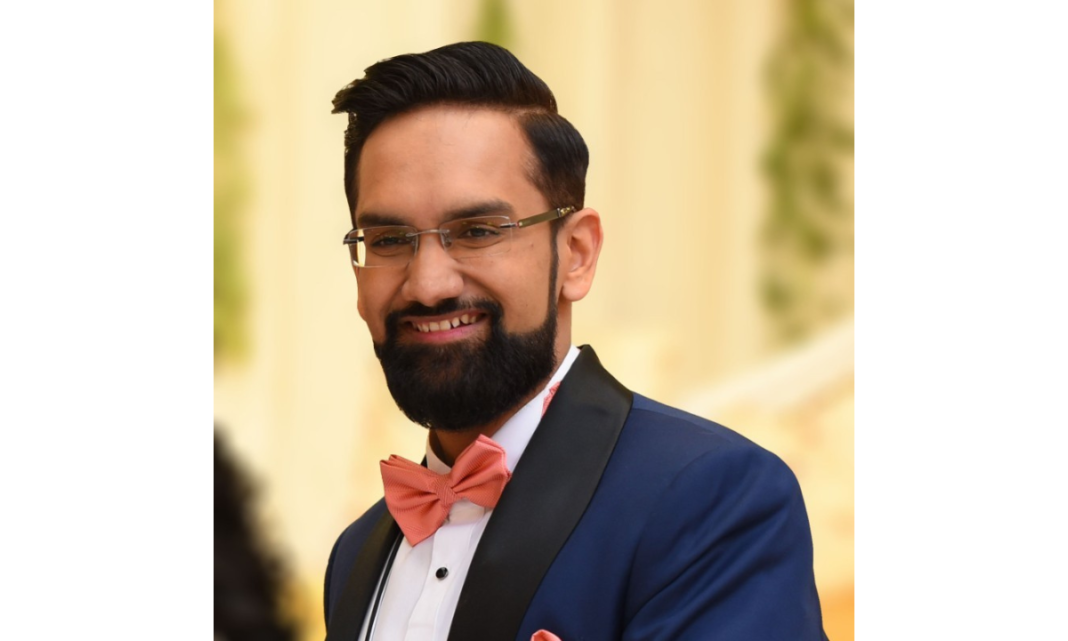
In this edition of CISO Diaries, we speak with Adeel Shaikh Muhammad, a cybersecurity strategist whose work spans executive advisory, AI governance, and digital transformation. His perspective reflects a shift in the industry: from security as control to security as strategic enablement. For Adeel, cybersecurity is ultimately about trust, helping organizations understand digital risk clearly, reduce exposure intelligently, and innovate responsibly in an AI-accelerated world.
About the Interviewee: Adeel Shaikh Muhammad
Adeel Shaikh Muhammad is a cybersecurity strategist with more than 15 years of experience across information security, cyber defense, networks, and systems. He currently serves as Regional Account Executive and Cybersecurity Consultant at Arancia, where he leads cybersecurity growth and strategic partnerships across the Middle East and Africa. His role spans enterprise engagement, channel development, and advisory work, connecting organizations with Arancia’s global expertise. He supports SOC, MDR, XDR, and AI-driven threat hunting initiatives through the DarkSense platform, contributes to offensive security projects such as red and purple team engagements, delivers cloud security assessments across AWS, Azure, and GCP environments, and advises on Governance, Risk, and Compliance aligned with ISO frameworks and regional mandates.
In addition to his corporate leadership, Adeel serves as a vCISO and field CISO, helping executive teams align digital ambition with a resilient, risk-informed strategy. He is an international speaker and two-time author of AI-Driven Transformation of SOC and SecOps and AI and Us: The Ethical Choices, with a strong focus on AI governance and the future of security operations. Holding over 40 certifications, including CISSP, CISM, CISA, CCISO, and PMP, and currently pursuing a Doctorate in Business Administration researching AI’s impact on SOCs in the Gulf region, he combines technical depth with business fluency to advance security as a strategic enabler of growth.
How do you usually explain what you do to someone outside of cybersecurity?
I usually say that I help organizations make better decisions about digital risk/safety. Most people think cybersecurity is about firewalls and hackers. In reality, it is about trust. I help leadership teams understand where they are exposed, how those risks could impact the business, and how to reduce them without slowing down innovation. In simple terms, I help businesses stay safe while they grow.
What does a routine workday look like for you, if such a thing exists?
There is rarely a routine day. My time is split between strategic discussions with executives, reviewing security architecture or risk assessments, and mentoring teams. Some days are focused on advisory work or board-level conversations. Other days are deeply technical. I also spend time researching and writing, especially around AI and governance. The common thread is translating complexity into clarity.
What part of your role takes the most mental energy right now?
Aligning business ambition with security reality. Organizations want to move fast, adopt AI, and expand digitally. Security must enable that growth, not block it. The mental energy comes from finding the balance between resilience and speed, and ensuring decisions are risk-informed rather than fear-driven.
What is one security habit or routine you personally never skip?
I never skip layered verification. Whether it is approving financial transactions, reviewing access rights, or evaluating new tools, I pause and verify. Trust but verify is not just a framework concept for me; it is a daily practice.
What does your own personal security setup look like?
At a high level, I use a password manager with strong, unique passwords across all services, hardware-backed multi-factor authentication where possible, encrypted devices, and secure backups separated from primary systems. I am also very mindful of minimizing my digital footprint and controlling data exposure, rather than just reacting to threats.
What book, podcast, or resource has influenced how you think about leadership or security?
The book that influenced me the most from a leadership perspective is Leaders Eat Last by Simon Sinek. It reinforced the idea that security leadership is not about control; it is about responsibility. From a security lens, I also draw inspiration from interdisciplinary research in psychology and behavioral economics because human behavior drives most risk decisions.
What is a lesson you learned the hard way in your career?
Early in my career, I believed that technical accuracy alone was enough. I learned that even the best technical recommendation fails if it is not communicated in business language. Influence matters as much as expertise. Security professionals must learn to speak to finance, operations, and strategy, not just technology.
What keeps you up at night right now from a security perspective?
The speed at which AI is being adopted without equivalent governance maturity. The technology is advancing exponentially, but oversight, accountability, and risk frameworks are still catching up. The risk is not only the malicious use of AI but also unintended consequences from poorly governed deployment.
How do you measure whether your security program is actually working?
I look beyond tool deployment and compliance checklists. I measure reduction in material risk exposure, time to detect and respond, executive awareness, and decision quality during incidents. If leadership can clearly articulate cyber risk in business terms and the organization can respond calmly under pressure, that is a strong indicator that the program is maturing.
What advice would you give to someone stepping into their first CISO role today?
Start by listening. Understand the business model, revenue drivers, and growth strategy before redesigning controls. Build relationships early with the CFO, legal, and product teams. Your success will depend less on the tools you choose and more on the trust you build.
What do you think will matter less in security five to ten years from now?
Manual, reactive control management. Much of today’s operational security work will become automated or AI-assisted. The value will shift away from running tools and toward interpreting risk and guiding strategy.
Looking ahead ten years, what do you believe security teams will spend most of their time on that they do not today?
AI governance, digital trust architecture, supply chain risk intelligence, and ethical oversight of autonomous systems. Security teams will become deeply integrated into innovation pipelines rather than operating as a downstream control function.