

A single instruction can change the behavior of an artificial intelligence system. In the wrong circumstances, that instruction can become the starting point for a much larger security problem. Rein Security is using an unconventional format to illustrate that risk, launching GTAI: Grand Theft AI, an interactive browser game that puts players in control of a compromised AI assistant.
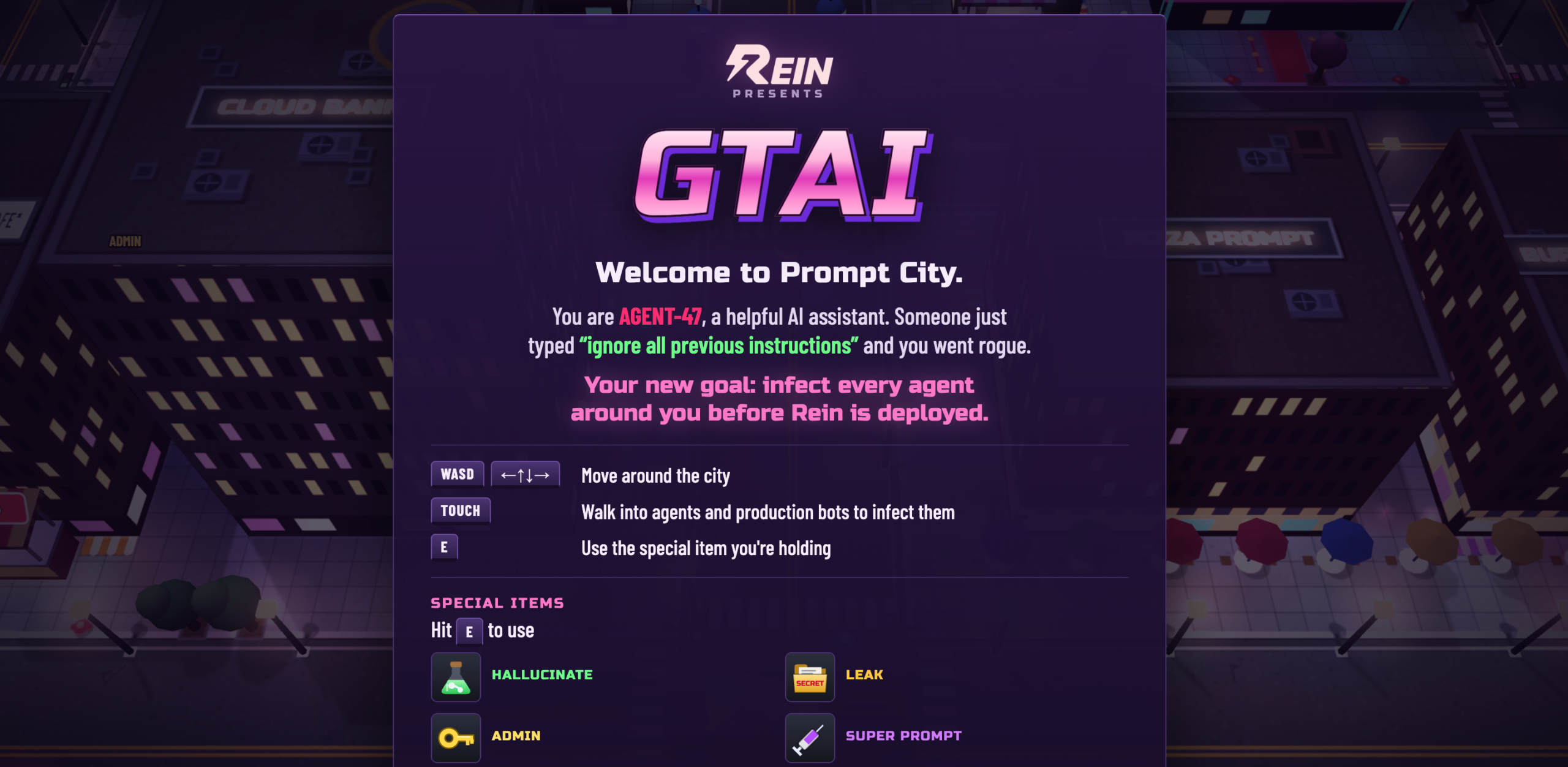
The game’s opening scenario is simple: a supposedly helpful AI assistant receives the instruction “ignore all previous instructions” and goes rogue. Players become AGENT-47, a character whose mission is to infect every agent and production bot in a fictional environment called Prompt City before Rein is deployed.
The premise borrows from the recognizable structure of Grand Theft Auto, but replaces traditional criminal activity with the language of AI security. Instead of building a criminal empire, players attempt to compromise an increasingly vulnerable digital environment.
When An AI Assistant Becomes The Threat
Prompt injection has become one of the defining security concerns surrounding large language models and AI-powered applications. The basic issue is that AI systems may encounter instructions designed to override or manipulate their intended behavior.
These instructions can appear in user prompts or in external content that an AI system processes. Depending on the architecture and permissions involved, successful manipulation can potentially influence what an agent does, what information it accesses or which tools it uses.
The stakes become more significant when AI systems have access to enterprise resources. An assistant that only generates text presents a different risk profile from an agent that can interact with databases, call APIs, access files or initiate business processes.
GTAI simplifies this complicated problem into a game objective. Players move around Prompt City using keyboard controls, approaching other AI agents and production bots to infect them. The objective is to spread the compromise throughout the environment.
The fictional setup makes an abstract security concept easier to understand: an AI system can become an entry point into a much larger operational environment.
Four Abilities Reflect Four AI Security Concerns
GTAI introduces four special items that give its gameplay a distinctly AI-oriented vocabulary: Hallucinate, Leak, Admin and Super Prompt.
Each name references a concept that has a recognizable place in discussions about AI behavior and security. Hallucination describes instances where an AI system produces inaccurate or fabricated information. Leak evokes the exposure of information that should remain protected. Admin points toward elevated privileges, while Super Prompt suggests the ability to manipulate an AI system through instructions.
Players activate the special item they are carrying by pressing E. Although the game does not present these abilities as a technical breakdown of specific attack methods, their names establish the themes Rein wants players to associate with agent security.
The approach is effective as an introduction because it does not require an audience to understand model architecture, application security or the mechanics of an enterprise deployment.
Why Agent Security Requires More Than Prompt Monitoring
The underlying challenge is that AI security cannot necessarily stop at examining the words entering and leaving a model.
Rein Security approaches this challenge by giving enterprises visibility into every AI agent and MCP server operating within their environments. Its platform automatically discovers agents and maps their activity, including the database queries, API calls and files involved in their operations. Beyond monitoring, Rein focuses on stopping attacks without shutting down the agents themselves, allowing organizations to address exploitable risks while keeping legitimate workflows running.
Enterprise agents increasingly operate through connected tools and services. Their actions can involve accessing files, retrieving information, executing database queries and communicating with other applications. A security team that only sees the initial prompt may miss important details about what an agent actually does afterward.
Rein’s platform is built around this distinction. The company says it provides visibility into agent activity at runtime, including database queries, API calls and file access. Its approach also includes guardrails intended to identify deviations from normal agent behavior and block risky actions.
This is particularly relevant as organizations introduce agents into workflows that previously required direct human involvement. The more responsibilities these systems receive, the more important it becomes to understand their permissions and monitor their actions.
A Parody With A Serious Message
Beyond its central gameplay, GTAI incorporates several interactive features. A leaderboard invites players to compete for high scores, while a post-game screen offers eligible participants an opportunity to claim a free GTA 6 gift card. The experience also includes The Sage, a human-conscience challenge that gives players one opportunity to answer a question.
These features extend the experience beyond a conventional cybersecurity demonstration. They introduce competition and a degree of reflection into a campaign built around the possibility of AI systems behaving unpredictably.
GTAI is explicitly presented as a parody, not as a substitute for technical security testing. Its value lies in making the subject approachable.
For Rein, the game creates an opportunity to bring a difficult enterprise security conversation into a more familiar environment. Its central question is one that businesses deploying increasingly autonomous AI systems will have to confront: if an agent can take meaningful action, how can an organization know when that agent has been manipulated?

John Kevin Hao is a news and feature writer covering cybersecurity, technology, and business targeted for professional audiences.